
What can we learn from the quiet decline of some of the oldest companies – those that once led an entire industry, and whose brand names are now barely remembered?
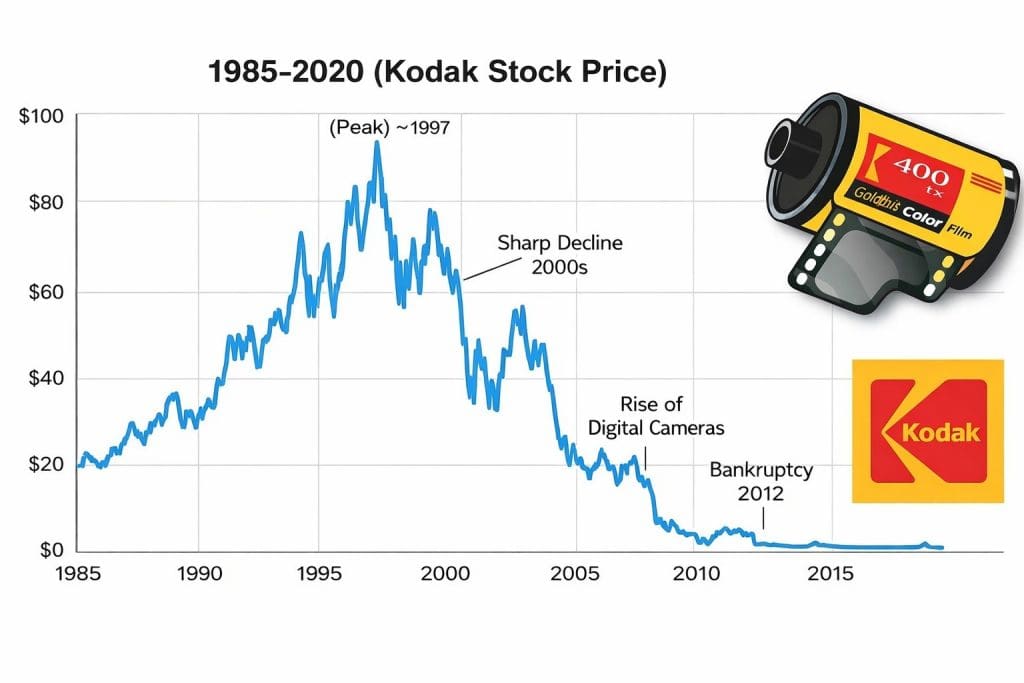
Not long ago it was reported that Kodak is again approaching bankruptcy. A 133-year-old company that, at its peak, held about 90% of the photographic film market in the United States and more than 70% of the global film market. It also controlled about 85% of the camera market in the United States and employed 145,000 people. And yet, precisely in an era when people take more photos than ever, Kodak left the game.
How is that possible?
The answer, as always, is simple:
The world has changed.
And it didn’t.
Kodak’s mistake was not purely technological. It not only knew the digital age was coming, it even developed a digital camera as early as 1975 (!). But it was afraid to touch its cash cow: photo film. It had a powerful, well oiled business model built on selling films and developing it, to the point that change was perceived as an existential threat rather than an opportunity.
But here is the real lesson: Kodak failed to identify its true core competency. Kodak thought it was a film company, when in fact it was a photography company. And photography is far more than any specific technology – it is the documentation of moments and stories.
Kodak fell in love with the “how”, and forgot the “why”, or the essence.
Nokia: when leading blinds
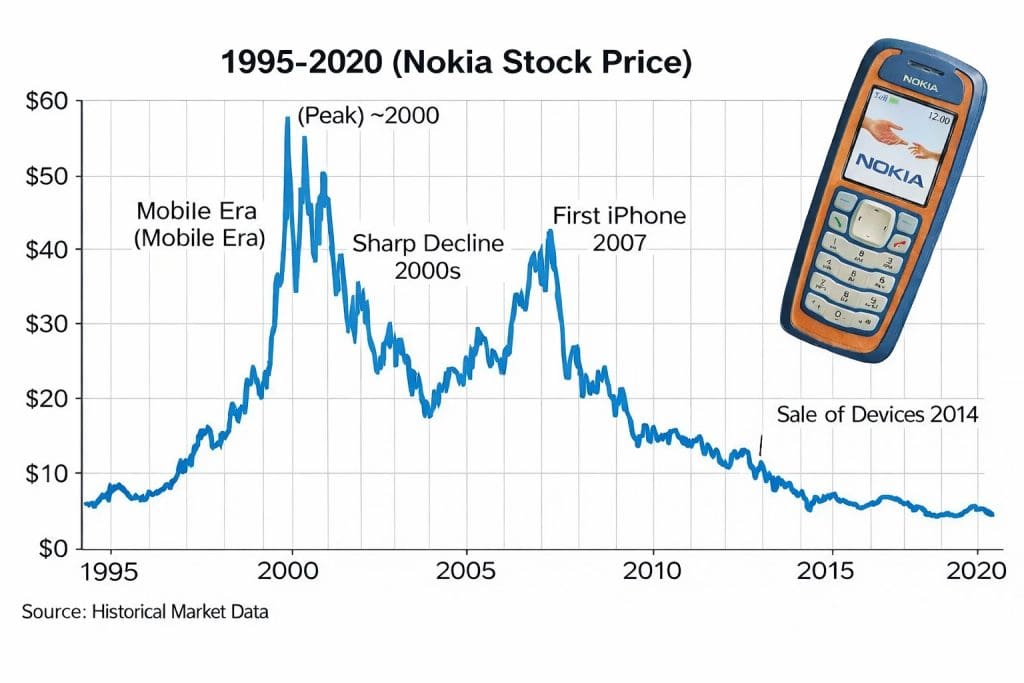
Collapse is easy to recognize when it shows up on a graph: a line that rises and rises, then drops sharply. That is what happened to Nokia as well. Remember the Nokia 6120? There was a time when Nokia was synonymous with the mobile phone itself.
In the mid-2000’s, Nokia held nearly 40% of the global phone market and even approached 50% – a figure no manufacturer has managed to replicate since.
So how did such a dominant company can disappear, when almost every person on Earth has at least one mobile phone?
Nokia relied on its Symbian operating system, which was outdated and difficult to develop on. It recognized the iPhone revolution (2007) too late, and the one that followed with Android. Instead of adapting, it insisted on slow development cycles, a heavy organizational structure, and sluggish internal decision making. When it finally tried to reinvent itself, it chose Windows Phone – a system that never reached critical mass among users and developers.
It wasn’t that the market shrank. It changed – and Nokia didn’t.
Core competencies: the secret of successful companies
This is where a business concept comes in that can explain almost any rise and fall: core competencies.
Core competencies are the unique combination of capabilities that differentiates a company from its competitors. Prahalad and Hamel (1990) defined core competency as something difficult to imitate, built over time, and the driver of real competitive advantage.
This is not about a specific product, but about a company’s essence – its distinctive strength.
In simple terms a core competency is what a company does better than others, in a way that meets what the world actually needs.
Consider a few familiar examples:
Amazon
Most people think Amazon is a shopping website. In practice, that is the least profitable part of its business. Ecommerce generates nearly 45% of its revenue, but operates on operating margins of 0% to 2%, and sometimes even negative.
By contrast, AWS, responsible for only about 16% of revenue, delivers between 50% and 70% of Amazon’s operating profit.
What, then, is AWS?
It is Amazon’s cloud division – a service that enables companies to store data, run applications, and manage their entire computing infrastructure in the cloud rather than on internal servers. In practice, AWS is the beating heart of the modern internet: countless apps, startups, financial institutions, and even government bodies run on this infrastructure.
But the interesting part is how AWS was born. Originally, Amazon built massive computing systems for itself to handle extreme peak periods – especially during holidays – when the system had to be exceptionally fast and stable. At a certain point, it realized that companies worldwide needed that same infrastructure. What began as internal infrastructure became Amazon’s biggest profit engine.
Alongside there is Amazon’s advertising division, generating nearly 50 billion dollars a year and considered one of Amazon’s most profitable areas. And there are also third-party seller services, bringing in roughly 140 billion dollars a year – far more profitable than Amazon’s own direct sales.
So the online store everyone knows is only the front: a huge engine for traffic, data, and transaction volume, while the real profit comes from elsewhere – cloud services, advertising, and the deep infrastructure that makes Ecommerce possible.
And here is Amazon’s true core competency, the one that connects everything and enables it all. That competency is not e-commerce, but speed.
Amazon sells speed.
Extreme logistics, relentless optimization, a supply chain of unusual efficiency, a promise of delivery within a day – and sometimes within hours – at global scale. Even AWS, which started as internal infrastructure built to withstand insane ecommerce peaks, is essentially a byproduct of the same capability: building systems that are exceptionally fast and stable.
Honda
Honda produces cars, motorcycles, boat engines, generators, and even engines for light aircraft. At first glance, this looks like total dispersion across unrelated domains. But through the lens of core competencies, one clear line appears that connects everything: engine engineering.
Engines are Honda’s true essence. This expertise has accompanied it from day one – the ability to build an engine that is more efficient, reliable, and precise than almost any competitor’s. When it remains faithful to this core competency, it can enter new fields without losing itself.
Cars? Engines.
Motorcycles? Engines.
Boats? Engines.
Light aircraft? Engines.
This focus – the understanding that the product changes, but the essence remains – is what enables Honda to stay continuously relevant for decades. Even as the world moves toward electricity, Honda does what it does best: take energy (of any kind) and turn it into motion.
Yamaha
Like Honda, Yamaha produces motorcycles. But it also produces pianos, guitars, synthesizers, sound systems, and marine engines.
On the surface, Yamaha can appear like a company “without a clear identity,” scattered across worlds with no connection. That impression exists only because the lens of core competencies has not yet been applied.
Once it becomes clear that Yamaha’s core competency is sensory-engineering precision – in other words, a unique blend of precise engineering, acoustics, and vibration, together with design – everything falls into place.
Its core competencies include a rare combination of:
- Deep understanding of sound and vibration – not only in music, but also in engines (vibrations, resonance).
- The ability to manufacture complex materials – wood, metal, plastic – at a quality and precision few can reach.
- Harmonious design that integrates function and aesthetics – visible both in a grand piano and in a sport motorcycle.
These capabilities allow Yamaha to move freely between music, audio, and motorized tools without losing itself for a moment.
Ben & Jerry’s
Is Ben & Jerry’s ice cream good? It does not really matter, because Ben & Jerry’s true superpower is not the quality of the ice cream, but the development of original flavors at a pace no large competitor comes close to. That is its real core competency. The company even has “Flavor Gurus,” a creative culinary team that develops, tests, predicts, and composes new combinations based on cultural trends, flavor research, and customer preferences.
Over the years, Ben & Jerry’s has developed more than 400 flavors – some temporary, some limited editions, and some that became global icons. By comparison, other large brands like Häagen-Dazs typically maintain a range of 20–40 permanent flavors.
Ben & Jerry’s launches 10–20 new flavors each year, and regularly removes a similar number from shelves, based on a philosophy that prefers movement and innovation over rigidity. Even its “Flavor Graveyard”, which officially commemorates more than 300 “buried” flavors, has become a symbol of continuous innovation.
Once this is understood, its secret becomes obvious – and it is clear it is playing in a completely different field from its competitors.
So what does all of this mean for us?
Before turning to what this means personally, it might be helpful to return to Kodak’s and Nokia’s stories and understand better what led to their decline. Both failed to understand their core competencies, so they clung too tightly to form rather than to what truly made them distinctive.
Kodak behaved not as a photography company but as a film company. It held onto the technology that made it an empire, rather than reconnecting with the essence that enabled it to rise in the first place. And so, when the world changed – and Kodak didn’t – it was pushed out and became irrelevant.
If Kodak had seen itself as a company specializing in photography rather than a specific technology that was temporary by nature, the shift to digital could have been natural and straightforward. It had deep experience in lenses, lighting, color engineering, and imaging technologies – assets that could have made it a leader in the new era as well.
It could, for example, have formed partnerships with smartphone manufacturers – similar to Huawei’s collaboration with Leica, which turned smartphone cameras into a symbol of quality. It could also have developed and refined a line of serious digital cameras, as Nikon and Canon did – both still alive, strong, and highly relevant in the digital era. Instead, Kodak remained stuck on film while the world moved on.
And what about Nokia?
If Nokia had understood that its real strength lay in the devices themselves – design, construction, reliability – it would not have insisted on keeping Symbian alive, long after it became outdated and cumbersome. Like other manufacturers, it could have adopted Android early and ridden the wave that swept the world from 2009 onward.
But Nokia insisted on seeing itself as both a hardware and software company, despite having no real chance of winning the software race against Apple and Google. It tried to prove it could be a complete ecosystem – and in doing so, it missed what it did best.
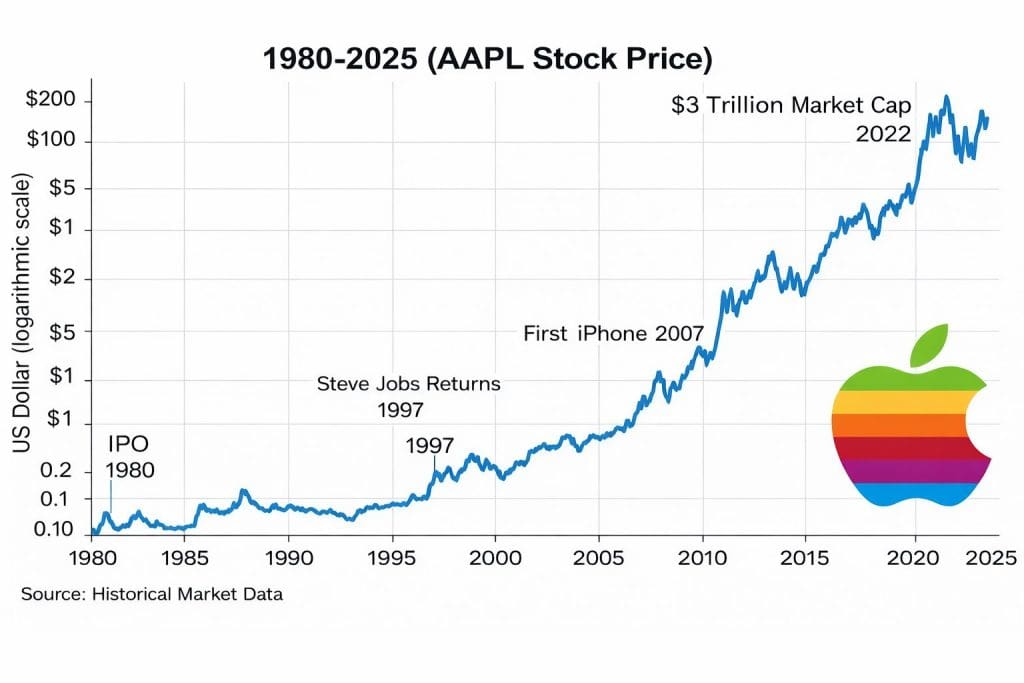
A company that does manage to combine hardware and software harmoniously is Apple. In fact, that is its core competency: uncompromising integration between the two worlds, producing a unique and elegant user experience – expressed in the common perception among Apple users that “it is not a laptop, it is a Mac”, or “it is not a phone, it is an iPhone”.
Samsung is also a good example of a company that stayed connected to its core competency. It did not insist on developing its own smartphone operating system (there was a short attempt called Tizen that never took off) and instead focused on its true strength: the devices. As a result, it is still here, leading the Android device market.
It would be easy to continue with many more examples, because the pattern is genuinely fascinating.
Netflix, for instance, began as a DVD-by-mail business and recognized the streaming revolution in time. It did not cling to the format – it remained faithful to the essence: making video content accessible. From there it grew into a powerhouse built on one of the world’s most advanced recommendation systems – an algorithm that knows what viewers will want to watch even before they do.

And then there is Airbnb, which does not truly compete with hotels, because its core competency is not accommodation, but a distinctive and authentic hosting experience – including extraordinary places like a treehouse in the middle of a forest, a rock-cut cave on a Greek island, or a converted barn in a town one would likely never have visited otherwise.
But I think this could be a good moment to stop with the examples – and turn to us.
Now – to us
Jim Collins, in his book Built to Last, writes that companies that succeed over time are those that know how to change – without losing themselves.
That is the central point.
The companies that succeed over time are those that, even if they appear to do many different things, remain aware of and connected to their core competencies, to what makes them distinctive, and focus on those capabilities.
And how is all of this relevant to us?
The answer is that a person is also, in a sense, a company. Think about it: a company is a group of people functioning like “cells” within a larger organism. A person is also an organization composed of different organs and cells that together form the body.
And the most important thing is that, just like companies, people also have core competencies. For most, these core competencies are hidden behind the titles used to define themselves.
When someone says, “I am a teacher”, “I am a fitness coach”, “I am a graphic designer”, he might identify himself with the title, and miss the essence. Titles are only wrapping of our true essence. And like all wrapping, they wear out. The world changes, the market changes, needs change – and what remains is a definition that may no longer serve.
We are in the midst of a major shift no less consequential than the Industrial Revolution. AI is entering every field, and many people may find themselves unemployed and struggling to make the required transition.
People, just like companies, fall because they are not aware of their core competency.
Those who stay connected do not fear change
Those who stay connected do not fear change. The world will continue to change, whether we want it or not. But those who remain connected to their core competency can change with it.
When what makes a person unique is understood, fear begins to loosen.
When what someone is truly good at becomes clear, focus becomes possible – and the rest can be delegated.
When a person is connected to his core competencies, change shifts from threat to opportunity.
But if my identity is “I am a fitness coach”, the ground may feel as if it is collapsing the moment AI starts generating personalized training plans instantly. If, however, I realize that my real competency is leading people to achievements – not only physically but also mentally – the range of possibilities becomes immediately broader and more stable. Here the concept of “translation” in the educational approach The Pedagogy for Third Millennium developed by Patrizio Paoletti becomes relevant: the ability to understand the internal process that enabled success in one domain, and then, from that awareness, apply the same process in other domains.
Once a fitness coach understands his underlying core competency, an entire world opens to him. If his essence is “training people toward achievements”, that identity is far broader than just “fitness coach”. And if his core competency is instead deep understanding of the human body and its mechanisms, doors open to nutrition, healthy lifestyle education, lectures, courses, and more. In both cases, the external title remains the same, but the core differs entirely, arising from completely different sources.
How can we identify our own core competencies?
This is where the Japanese concept of ikigai can help: the place where talent meets passion, what the world needs, and what can provide a livelihood. Ikigai invites attention not only to what comes naturally, and not only to what is enjoyable, but also to what holds value for others – and what can become a sustainable profession.
When these four circles overlap, a rare space is created in which action is grounded in meaning and satisfaction, professionalism, contribution, and fair return.
Ikigai helps distill core competency – the deep essence of what a person brings to the world that no machine or algorithm can replace, because it is unique to the way one thinks, feels, creates, and relates to other people.
For example, a fitness coach may discover that the real value is not only building training plans, but helping people develop discipline, believe in themselves, and move beyond their limits.
Ikigai reveals where true value meets the world’s needs.
And once the true value we bring becomes clear, competition fades – because there is no one else exactly the same.
But sometimes it is difficult to see this by ourselves. This is where another simple method helps: asking other people.
We all have qualities that we take for granted precisely because they come easily to us – and those are often what others see most clearly. People can recognize what remains invisible to us.
For example, personally, I perceive myself as not that organized, with 87 ideas running in parallel at any given moment. Yet throughout life, different people repeatedly reflected how much they value the order, structure, and organization that I bring. And through this mirror of the others I can recognize that order and organization are my strengths.
Closing words
Kodak and Nokia did not fall because of technological gaps or lack of resources. They fell because they identified with a particular form, with their title, and did not remain faithful to their core competencies.
Awareness of core competencies is the key that makes change possible in a changing world.
Because the world will continue to change. That is inevitable.
And the good news is that we can change, too.

